
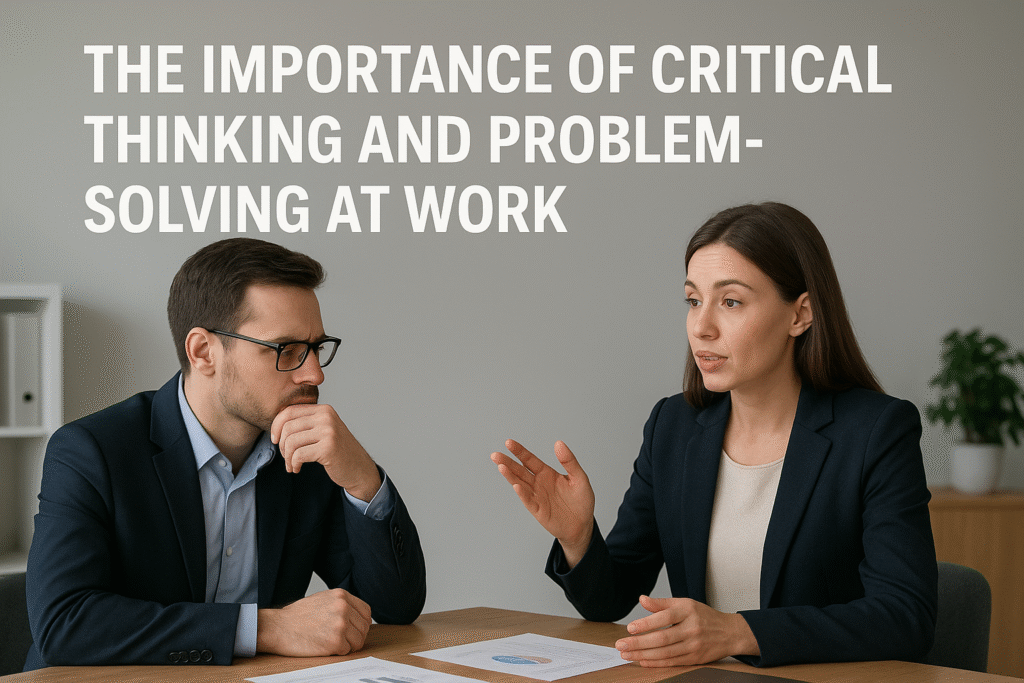
Have you ever been in a situation at work where everything seemed fine—until suddenly, an unexpected problem showed up? Maybe a client changed their requirements at the last moment, or your team ran into a technical error minutes before a big presentation.
In those moments, it’s not just technical skills that matter. What makes the real difference is how you think and respond to the challenge. This is where critical thinking and problem-solving come in. They are the invisible tools that help professionals turn chaos into clarity, and obstacles into opportunities.
And the best part? These skills are not reserved for a lucky few. Anyone can learn, strengthen, and apply them to grow in their career.
Why Critical Thinking Is a Game-Changer
Critical thinking simply means thinking with purpose and clarity. It’s about examining information carefully, asking the right questions, and making decisions based on facts instead of emotions or assumptions.
For example, imagine your team is deciding whether to expand into a new market. Instead of rushing in with excitement, a critical thinker asks:
- What are the risks?
- Is there enough demand?
- What resources will we need?
By analyzing the situation, they save the company from costly mistakes and help plan a smarter strategy.
In short, critical thinking acts as a filter. It helps you sort through noise, identify the truth, and focus on what matters most.
Problem-Solving: Turning Ideas into Action
Problem-solving takes critical thinking one step further. It’s about finding solutions and acting on them. Whether it’s fixing a conflict between coworkers, handling an upset customer, or finding a workaround for a technical glitch, problem-solving is what keeps workplaces running smoothly.
For instance, think about a team facing a sudden system outage before an important meeting. Instead of panicking, a strong problem-solver stays calm, contacts IT, prepares backup options like a recorded demo, and keeps the client informed. This not only saves the day but also builds trust and credibility.
Problem-solvers are highly valued employees because they don’t just point out problems — they fix them.
Why These Skills Matter in Every Workplace
No matter the industry, these two skills are essential. Here’s why:
- Better Decision-Making – You avoid guesswork and base your choices on evidence.
- Efficient Workflows – Problems are solved quickly, saving time and stress.
- Leadership Growth – Leaders must think critically and solve problems daily.
- Innovation and Creativity – Thinking differently often leads to fresh, groundbreaking ideas.
- Career Success – Those who solve problems are trusted with greater responsibilities and promotions.
Real-World Examples
- Healthcare: A nurse who notices unusual symptoms in a patient uses critical thinking to question initial diagnoses, helping prevent bigger issues.
- Business: A sales manager solves declining numbers by analyzing customer feedback and adjusting the sales strategy.
- IT: Developers quickly troubleshoot bugs by breaking down code logically rather than panicking.
As you can see, no job is complete without these skills.
Practical Ways to Improve Critical Thinking
Like a muscle, critical thinking gets stronger with use. Here are some ways to practice:
- Ask Questions: Instead of agreeing right away, ask “Why?” or “What evidence supports this?”
- Challenge Assumptions: Just because something “has always been done this way” doesn’t mean it’s the best way.
- Seek Different Perspectives: Talk to people from varied backgrounds. They may spot what you missed.
- Pause Before Reacting: A short pause helps you respond wisely instead of emotionally.
👉 Example: If someone suggests cutting staff to reduce costs, a critical thinker might question, “What about long-term impact on team morale and productivity?”
How to Strengthen Problem-Solving Skills
Problem-solving isn’t about luck—it’s a process. Here’s how to get better:
- Define the Problem Clearly – Know exactly what you’re solving.
- Break It Down – Small parts are easier to fix than one big issue.
- Brainstorm Solutions – List all possible ideas, even unusual ones.
- Evaluate Options – Consider cost, time, and impact before choosing.
- Act and Review – Try a solution, then learn from the results.
👉 Example: If a client rejects your pitch, don’t see it as failure. Break it down: Was the message unclear? Was timing wrong? Use the lesson to improve the next pitch.
The Role of Creativity
Problem-solving isn’t always about logical steps. Sometimes, creativity brings the breakthrough.
During the pandemic, many fitness trainers couldn’t conduct in-person classes. Instead of giving up, creative problem-solvers launched online classes, home workout apps, and virtual coaching sessions. Many ended up reaching a bigger audience than before.
Creativity, when combined with critical thinking, turns challenges into opportunities.
How Technology Helps
We live in a digital age, where tools can help us think better and solve faster. Platforms like AI Mastery Plan can teach you how artificial intelligence supports decision-making and innovation. From brainstorming apps to online leadership courses, technology helps sharpen these skills wherever you are.
The Growth Mindset
Critical thinking and problem-solving thrive in a growth mindset. Believe that you can improve through effort and learning. Instead of saying, “I’m not good at solving problems,” shift to, “I can get better with practice.”
Every workplace challenge is a chance to grow stronger. If you want more resources, you can explore effective ways to build your skills and confidence.
Final Thought
Workplace problems are not obstacles—they are opportunities waiting for you to shine. Critical thinking allows you to see challenges clearly, while problem-solving helps you take smart action. Together, they make you resilient, creative, and ready for success.
Remember: Your next big career leap may not come from working harder, but from thinking smarter and solving problems better. So the next time you face a challenge, smile, pause, and remind yourself—this is your chance to grow.
FAQs About Critical Thinking and Problem-Solving
1. Why are critical thinking and problem-solving important at work?
They help employees make sound decisions, avoid mistakes, and create solutions that move the business forward.
2. Can these skills be learned or are they natural?
They can absolutely be learned through practice, reading, training, and real-world experience.
3. How do critical thinking and problem-solving differ?
Critical thinking is analyzing information. Problem-solving is applying that analysis to take action.
4. Which careers need these skills most?
Every career benefits, but they’re crucial in leadership, IT, healthcare, education, and business.
5. How do I practice critical thinking daily?
Ask questions, reflect before acting, and challenge common assumptions.
6. What is the biggest mistake people make when solving problems?
Jumping to quick fixes without understanding the full problem.
7. How can I stay calm during problem-solving?
Breathe, break challenges into smaller parts, and focus on one step at a time.
8. How can technology help develop these skills?
AI tools, simulations, and learning platforms increase decision-making and problem-solving abilities.